Local Voices

By Santiago Bonhomme
Writer
Santiago Bonhomme
•

This Sunday will be my first Father’s Day without my father.
I’ve written that sentence several times over the past few days, and each time I end up looking at it as though there were something wrong with it. Not with the words, but with the order of things.
I’m 45. I’m the father of two children. It has been a long time since anyone needed to remind me that I’m an adult. And yet, until less than a year ago, there was still a man somewhere in the world who allowed me to occupy the place of a son.
We weren’t close. Time, with its ships, slowly drew our shores farther apart. Perhaps that is why his absence has been so difficult to understand.
When someone has been part of our everyday life, we know with some precision what is no longer there when they die: a voice, a conversation, a habit, the way they walked into a room. With my father, it is different. In recent years his presence had become less visible and, for that very reason, his absence has been harder to name. Sometimes I think what I miss is something far more elemental: knowing he was alive.
That seems like very little until it is no longer true.
There are only a few days left until it has been a year since his death, and over these past few weeks I have felt sadder than usual. It is not a sadness that interrupts the day. I do the same things, I talk, I work, I carry on with the errands and obligations of a life that continues with its extraordinary indifference. It is something that arrives unannounced and stays for a while, like certain visitors who know the house too well.
The years, too, are slipping into my shoes that bad habit of remembering too much.
There are passages from my childhood that I now see more clearly than I did ten or twenty years ago. A house, a table, an ordinary afternoon. Fragments that seemed unimportant return intact, while events I once thought essential begin to fade. I imagine this happens to all of us. There comes an age when the films of the past are released all over again.
With my father, what returns is not always kind.
There were rifts, disagreements, episodes I carried with me for a long time and now prefer to leave where they are. Not because I have forgiven them all, nor because death has made them irrelevant. I have simply reached an age when I am beginning to suspect that memory, too, demands a certain responsibility.
Especially when you have children.
There are family stories that, repeated often enough, end up being inherited even though no one ever decided to pass them on. A sentence spoken thirty years ago can travel through an entire generation. A resentment can find a home in people who were not even there.
I don’t want that for my children.
There are things that belong to him and me. I do not need to weave them into the story I am writing with my children, nor teach them to see their grandfather through my wounds.
Perhaps growing older also means deciding what we do with what happened to us.
And yet, I miss him.
That is the contradiction I still cannot resolve.
Longing has no sense of justice. It does not keep accounts of the good moments and the bad. Nor does it ask whether we were close enough to be granted the right to miss someone.
Since he died, I have come to understand that we can also long for what was left unfinished. Death does not repair a relationship or finish the conversations left hanging. It has, rather, the unpleasant habit of leaving things exactly where they were.
Perhaps that is why lately I have thought less about what kind of father he was and more about what kind of father I am.
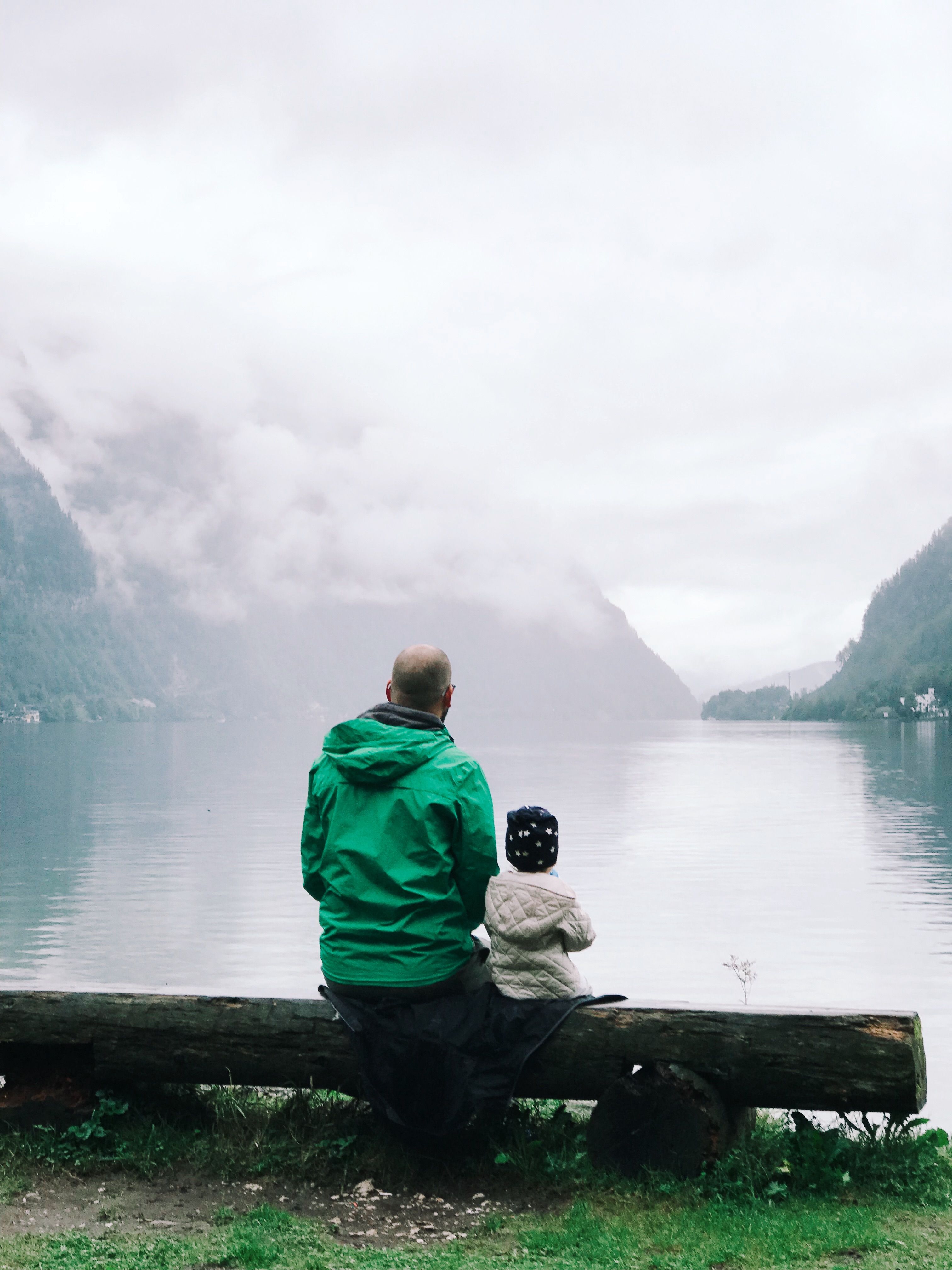
Photo: Iryna Dubrovska / Pexels
I belong to a generation that has tried to change certain things. Many of us grew up with men for whom loving someone and showing that love were not necessarily the same thing. We talk more with our children, ask how they feel, know their friends, go into their schools, cook, carry backpacks, wait outside practices. We try to be there.
I don’t know if we are better.
When they are adults, our children will probably have their own inventory of our mistakes.
And they will be right about some of them.
Perhaps that is one of the less comfortable truths of fatherhood. You can love someone deeply and still get things wrong.
Having children, moreover, is no longer an obligatory stop on the way to adulthood. More and more people choose not to have them. Some for economic reasons, others for personal or professional ones, or simply because they have never felt the desire. It seems to me a choice every bit as legitimate as the opposite one.
But from where I stand, there is something I find difficult to imagine outside my own life.
Fatherhood has given me some of my greatest fears. It has cost me sleep, freedom, patience, and that slightly irresponsible ease with which you could move through the world when the only person you had to answer for was yourself.
It has also made larger a life I already thought was complete.
I am not talking about finding the meaning of life. I distrust sentences that claim to settle things too dense for a single line.
I mean something less grandiose and, to me, far more extraordinary.

Photo: Mickoh Ramos / Pexels
To love two people knowing that one day they will have to move away from me. To accompany them as they build a childhood they will one day remember in ways I cannot control. To accept that some of my words will remain and that others, I hope, will disappear forever.
I have been thinking about that a lot lately.
On Sunday my children will probably come into my room early. There will be a drawing, perhaps a card made at school, that fairly obvious secrecy with which children prepare a surprise. I will be happy. I will hug them. I will laugh.
And yet there will be an empty chair that no one else can see.
Not exactly my father’s.
The son I could still be while he was alive.
ABOUT THE AUTHOR
Writer
Santiago Bonhomme is a Queenstown-based writer and journalist. His work for Queenstowning explores place, culture, memory and the lives built around them.
View profile →
Enjoyed this story?
Queenstowning is independently built. If you enjoy what we’re creating, you can help keep the stories coming by buying the team a coffee.
Buy the team a coffee ☕
Tag @Queenstowning or use #Queenstowning and show us your version of the Queenstown state of mind.