
By Cesar Carvajal
Founder & Editor
Cesar Carvajal
•

Hakitekura’s story is incorporated into the artwork of Queenstown’s Post Office Precinct. The glass works were created by Ngāi Tahu artist Ross Hemera.
There are things in Queenstown that are very easy to walk past.
We move through town quickly. Across Camp Street, through the Post Office Precinct, past the courthouse, cafés and shops. Somewhere between looking at a phone, meeting somebody for coffee or trying to find a park, it is easy not to notice the glass panels beside the stream.
Look more closely and there is a story there.
The artwork is part of a wider collection of artistic and architectural elements throughout the Post Office Precinct that interpret the story of Hakitekura, a Kāti Māmoe woman whose name belongs to this landscape long before streets, hotels, ski fields or a town called Queenstown appeared here.
Aukaha, which represents five papatipu rūnaka from the wider Otago region, remembers Hakitekura as the first person to swim across Whakatipu Waimāori - Lake Whakatipu.
And once you know her story, parts of Queenstown begin to look slightly different.
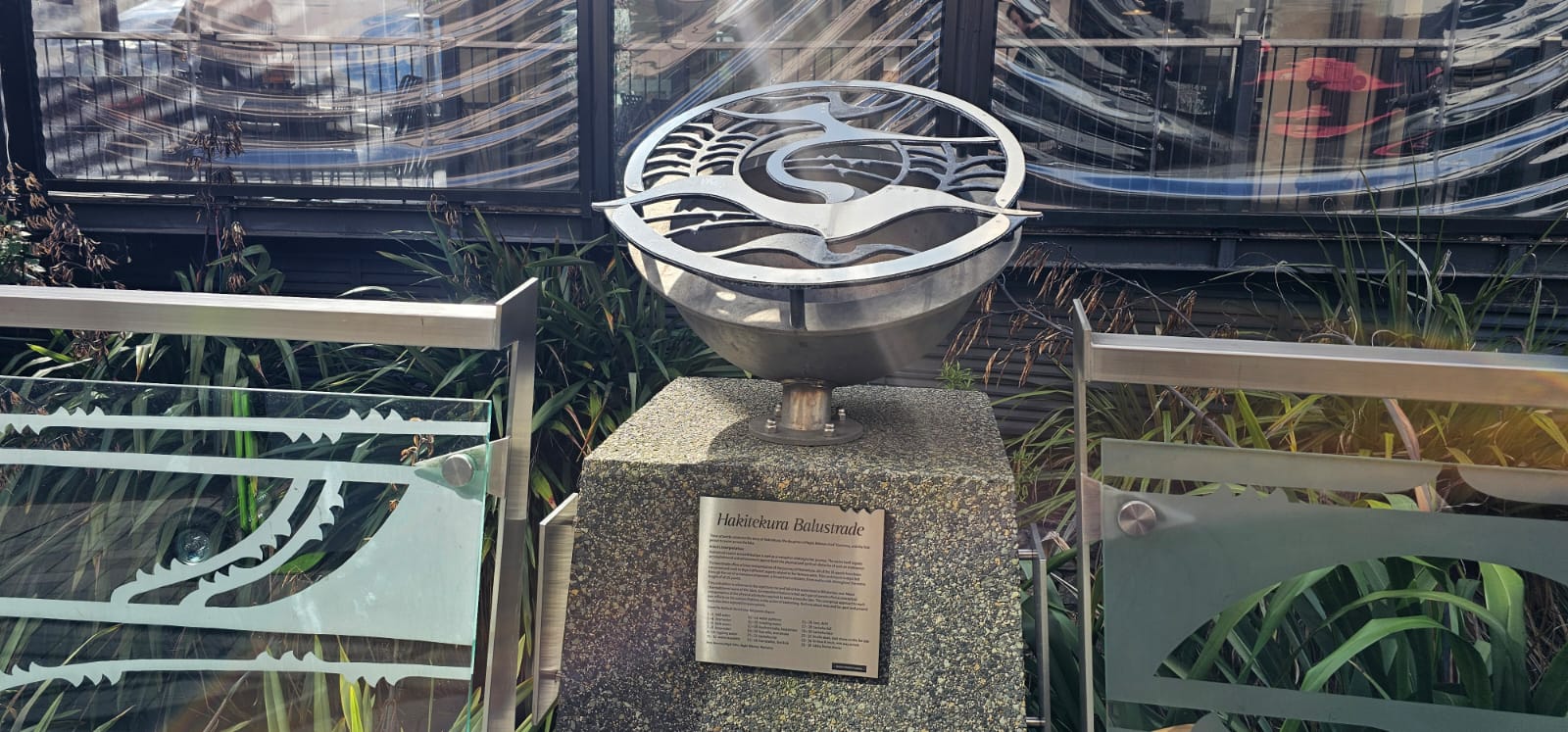
Hakitekura’s story is sandblasted into glass panels in Queenstown’s Post Office Precinct. Ngāi Tahu artist Ross Hemera interpreted elements of her story through water, swimming, fire and landmarks.
Before Queenstown
The statutory acknowledgement for Whakatipu Waimāori records a landscape that was travelled through, lived in and used by generations of Māori long before European settlement.
Among the permanent settlements was Tāhuna, near present-day Queenstown. Te Kirikiri Pā was located where the Queenstown Gardens are found today. The lake provided access to seasonal camps, food resources and the pounamu areas at the head of Whakatipu.
The same statutory history remembers Haki Te Kura, daughter of Ngāti Māmoe chief Tūwiriroa, for swimming across the lake from Tāhuna - a distance recorded as about three kilometres.
Other mana whenua accounts preserve more of the story.
Young women at Tāhuna would compete in the water, trying to outswim one another. Hakitekura decided she wanted to go farther.
She asked her father for a kauati, a stick used for making fire, and gathered dry raupō. She wrapped the materials tightly in harakeke so they would remain dry.
Then, in the darkness before dawn, she entered the lake.
It is worth stopping there for a moment.
Anyone who lives around Whakatipu knows what that means.
This is not a warm lake. Even in summer, entering the water can immediately change your breathing. Weather moves quickly through the basin, and the scale of the lake becomes much more obvious when you are actually in it.
Hakitekura entered that water before sunrise, carrying the materials she would need to make a fire when she reached the other side.
No wetsuit.
No support boat.
No GPS watch recording the crossing.
Only the lake and the landscape.
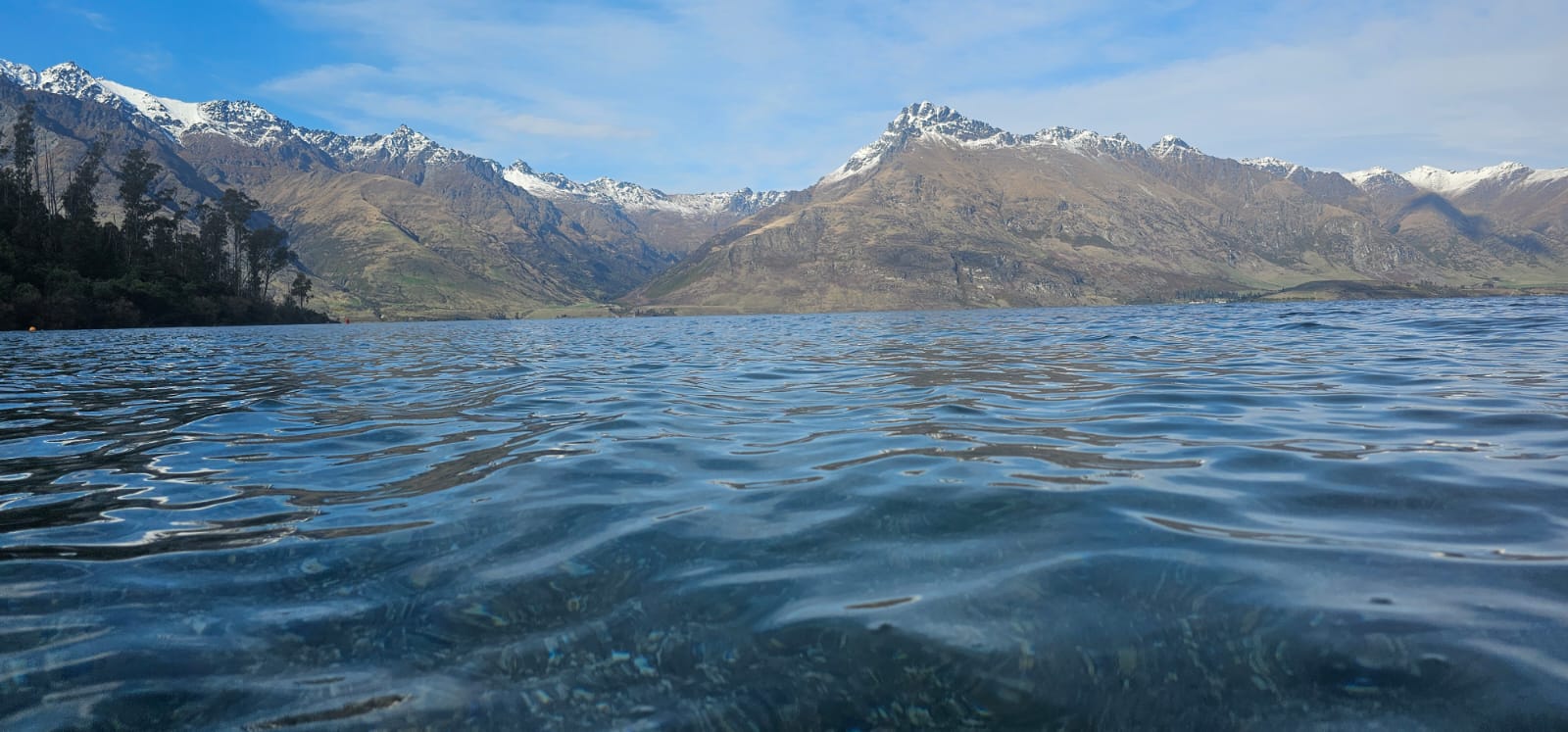
Hakitekura set out from Tāhuna before dawn and crossed Whakatipu Waimāori towards the southern shore. Contemporary mana whenua accounts remember the crossing as roughly three kilometres.
The mountains ahead
Hakitekura's crossing is also remembered through the mountains.
Accounts of the swim describe her setting her course by the tops of what are now known as Cecil and Walter Peaks, which she could make out as the first light of morning touched them.
Their Māori name, Kā Kamu-a-Hakitekura, remembers that moment - the peaks appearing like eyes twinkling in the dawn.
She eventually reached the opposite shore at the place known today as Refuge Point.
There she unpacked the kauati and dry raupō she had carried across the lake and lit a fire. The smoke became visible from Tāhuna. In some recorded versions of the story, people initially wondered whether the fire had been lit by an enemy until Tūwiriroa remembered what his daughter had asked him for the day before.
Her crossing was complete.
The place became associated with her fire: Te Ahi-o-Hakitekura.
What happened that morning did something else as well.
It placed Hakitekura's story into the geography.
The mountains, the shoreline, the high ground above Queenstown and other places around the basin came to carry names associated with her.
Her achievement did not survive only in a written record.
It survived in the landscape.
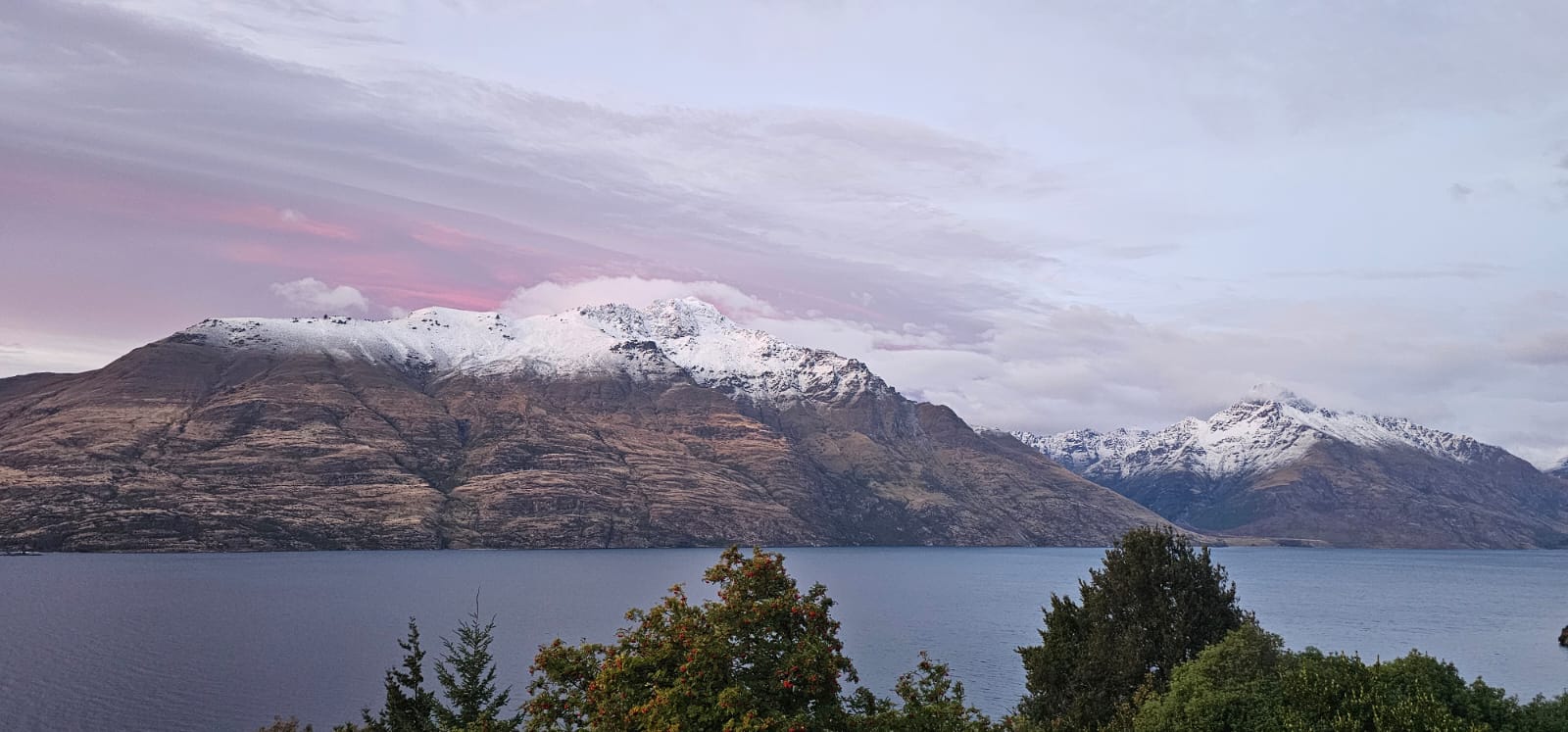
Cecil and Walter Peaks are known together as Kā Kamu-a-Hakitekura, a name connected with the dawn light Hakitekura used to guide her crossing.
A story hidden in the middle of town
Centuries later, another chapter was added to the story.
Ngāi Tahu Property developed Queenstown's Post Office Precinct, and its five principal buildings carry names connected with Hakitekura: Te Taumata, Kā Kamu, Tāhuna, Te Nuku and Te Ahi.
They are not decorative Māori names added to otherwise unrelated buildings.
Together, they reconstruct parts of the story.
Tāhuna remembers the settlement where Hakitekura lived.
Te Taumata refers to Te Taumata-o-Hakitekura, associated with the high ground of Ben Lomond from which she is remembered as watching the swimming competitions below.
Kā Kamu connects with Kā Kamu-a-Hakitekura - Cecil and Walter Peaks.
Te Nuku recalls Te Nuku-o-Hakitekura, associated with the Kawarau Peninsula.
And Te Ahi remembers the fire she lit after reaching the other side of the lake.
The artwork brings those pieces together.
Ngāi Tahu artist Ross Hemera created coloured glass, cut-glass panels and seven large illuminated elements throughout the precinct interpreting Hakitekura's narrative. His artistic treatment included themes of water, swimming, fire and landmarks.
Her story was also sandblasted across 36 glass panels along the precinct's stream.
Which means that one of Queenstown's oldest stories now sits beside offices, cafés, shops, a courthouse and people walking to work.
You do not need to enter a museum to find it.
You just have to notice it.
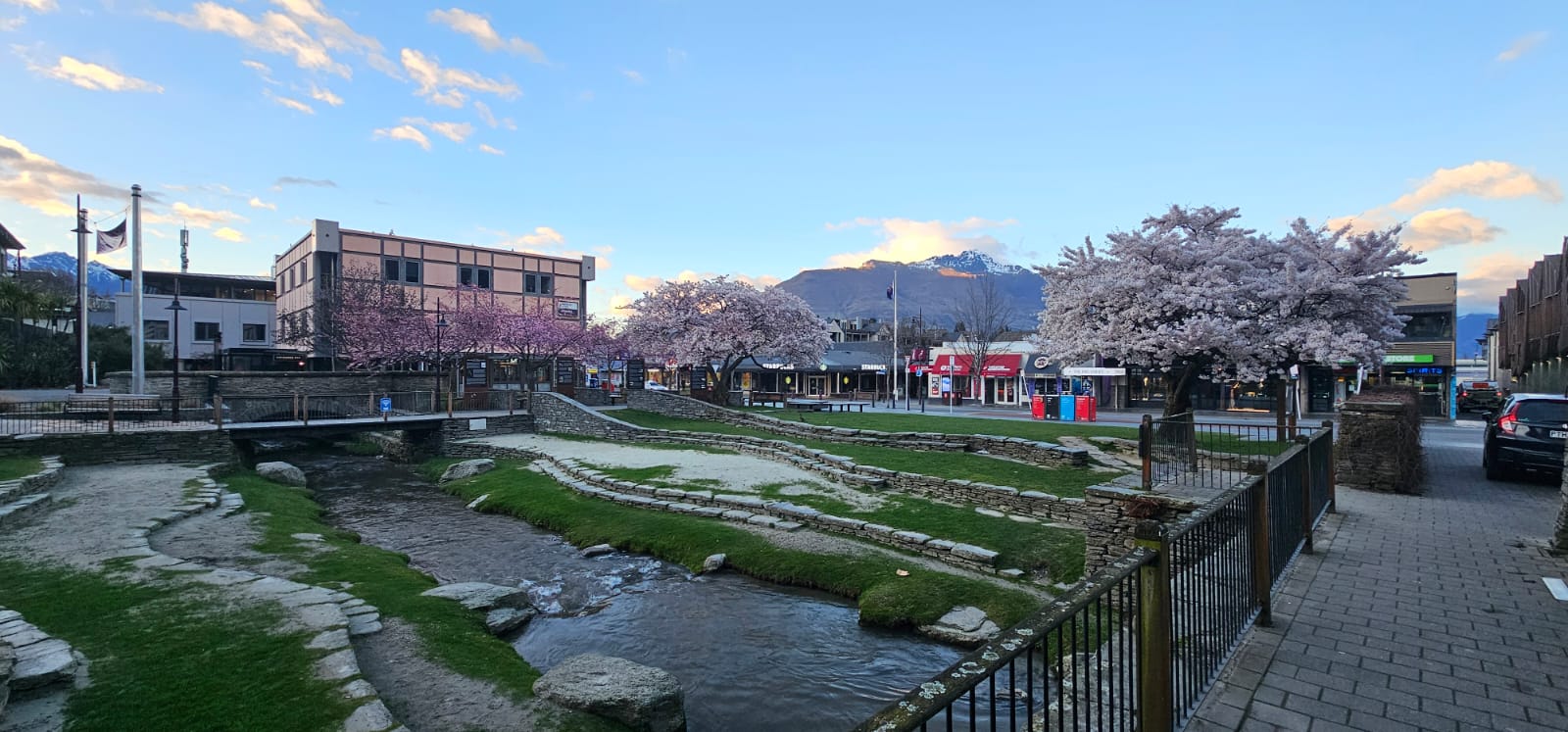
The Post Office Precinct contains five buildings named Tāhuna, Te Taumata, Kā Kamu, Te Nuku and Te Ahi - each connected with the story and landscape of Hakitekura.
The Queenstown underneath Queenstown
There is something particularly interesting about discovering this story now.
Queenstown talks constantly about growth. We discuss houses, roads, airports, tourism, infrastructure and what the district might look like in another twenty or fifty years.
Those conversations matter.
But rapid growth can sometimes give us the impression that Queenstown's history begins with whatever was built most recently, or perhaps with the pastoral settlers and gold miners who arrived during the nineteenth century.
It does not.
Whakatipu was already a human landscape.
There were settlements, travel routes, food-gathering places and generations of knowledge connected with the lake. Tāhuna and Te Kirikiri existed within that world long before William Rees established his sheep station nearby and before the gold rush transformed the settlement that would become Queenstown.
Hakitekura makes that older history tangible.
She was not an abstract population in a timeline.
She was a young woman looking across the same body of water we look across today and deciding she wanted to swim it.
The mountains were already there.
The cold was already there.
The distance was already there.
And apparently, so was the desire to find out whether something difficult could be done.
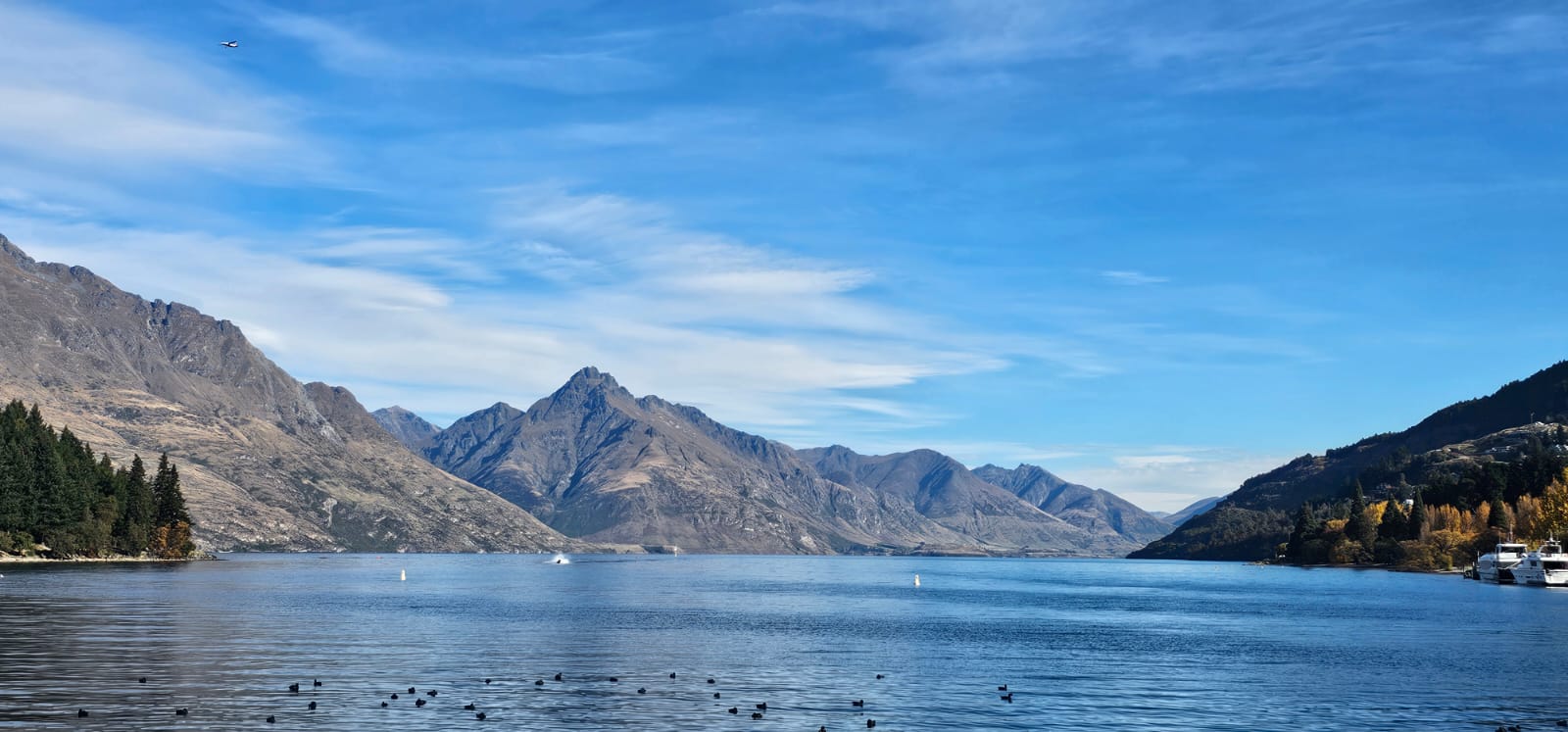
Whakatipu today. Long before the modern town developed along its shore, the lake was part of a landscape of settlements, travel, mahika kai and generations of mana whenua history.
Next time you walk past
Perhaps that is what makes the artwork in the Post Office Precinct so effective.
It does not dominate the street.
There is no enormous monument demanding that everybody stop.
Instead, the story has been woven into a place people use every day.
Into glass.
Into architecture.
Into names.
Once you know what those names mean, the precinct changes slightly.
So does the lake.
Next time you stand in Queenstown Bay and look across Whakatipu, try imagining it without the hotels and roads, before the steamships, before the miners arrived and before anyone called the settlement Queenstown.
Look towards the mountains on the opposite shore.
Somewhere across that water, before dawn, Hakitekura began swimming.
And generations later, Queenstown is still telling her story.
Sources
The historical background for this story draws primarily on the Ngāi Tahu Claims Settlement Act 1998, Schedule 75: Statutory acknowledgement for Whakatipu-wai-māori, for the longstanding Ngāi Tahu relationship with the lake, the settlements of Tāhuna and Te Kirikiri and the recorded crossing of Haki Te Kura; Aukaha's Te Ahi-o-Hakitekura discoverable narrative, for the mana whenua account of the swim and fire at Refuge Point; Te Karaka, Issue 44 (2009), published by Te Rūnanga o Ngāi Tahu, particularly the feature Marks of an ancestor, for the Hakitekura narrative, the associated place names and Ross Hemera's artwork; and Ngāi Tahu Property's Queenstown Post Office Precinct material for the names and contemporary uses of the precinct's five buildings.
Historical sources render her name in several forms, including Haki Te Kura, Haki-te-kura, Hakitekura and Hākitekura. Queenstowning uses Hakitekura through this story for consistency.
ABOUT THE AUTHOR
Founder & Editor
Cesar Carvajal is a Queenstown-based writer, editor and author. He is the founder of Queenstowning and writes about local life, history, growth and the people shaping the region.
View profile →
Enjoyed this story?
Queenstowning is independently built. If you enjoy what we’re creating, you can help keep the stories coming by buying the team a coffee.
Buy the team a coffee ☕
Tag @Queenstowning or use #Queenstowning and show us your version of the Queenstown state of mind.