
By Cesar Carvajal
Founder / Editor
Cesar Carvajal
•

Queenstown is very good at building houses.
Drive through Hanley’s Farm and you can almost watch a neighbourhood taking shape in real time. Keep going around the Whakatipu Basin and the same story appears in different forms: subdivisions, apartments, townhouses, roads, earthworks and plans for thousands more homes.
That is not necessarily a criticism. For months, housing has been one of the loudest conversations in Queenstown. People have been asking for more homes, more supply and more options for the people who actually live and work here.
Well, the houses are on the way.
And that is good news.
But while looking at all that growth recently, another question kept coming up:
How many houses can Queenstown build before it builds another high school?
It seems like another high school is already part of the planning conversation.
One high school in a fast-growing basin
Wakatipu High School describes itself today as having nearly 1,550 students. It is a modern school with a campus that has already expanded as the district has grown.
Meanwhile, the Ministry of Education’s 2026 demand planning identifies the Wakatipu Basin as a significant growth area. State and state-integrated school rolls in the basin grew 14.1% between 2021 and 2025, and the Ministry says it has initiated processes to acquire further land to accommodate projected student growth.
Budget 2026 went a step further, with the Government confirming that funding had been set aside to purchase a site for a future new high school in Queenstown.
That matters.
It means this is not a story about nobody noticing the problem. Planning is happening.
But when you look at what is happening around the school system, the scale and speed of the town’s growth becomes difficult to ignore.
Look at what we are planning to build
At Te Pūtahi Ladies Mile, long-term planning has contemplated roughly 1,700 to 2,400 additional dwellings, alongside transport, infrastructure and community facilities - including provision for a second high school for the Whakatipu area.
Then there is Te Tapuae Southern Corridor, stretching through areas including Hanley’s Farm, Jack’s Point and Homestead Bay.
QLDC says the corridor could eventually support around 9,300 homes. Its structure plan also contemplates commercial centres, transport improvements, three-waters infrastructure, community facilities and new educational provision.
Nine thousand three hundred homes is difficult to visualise.
But you can see the beginning of it already.
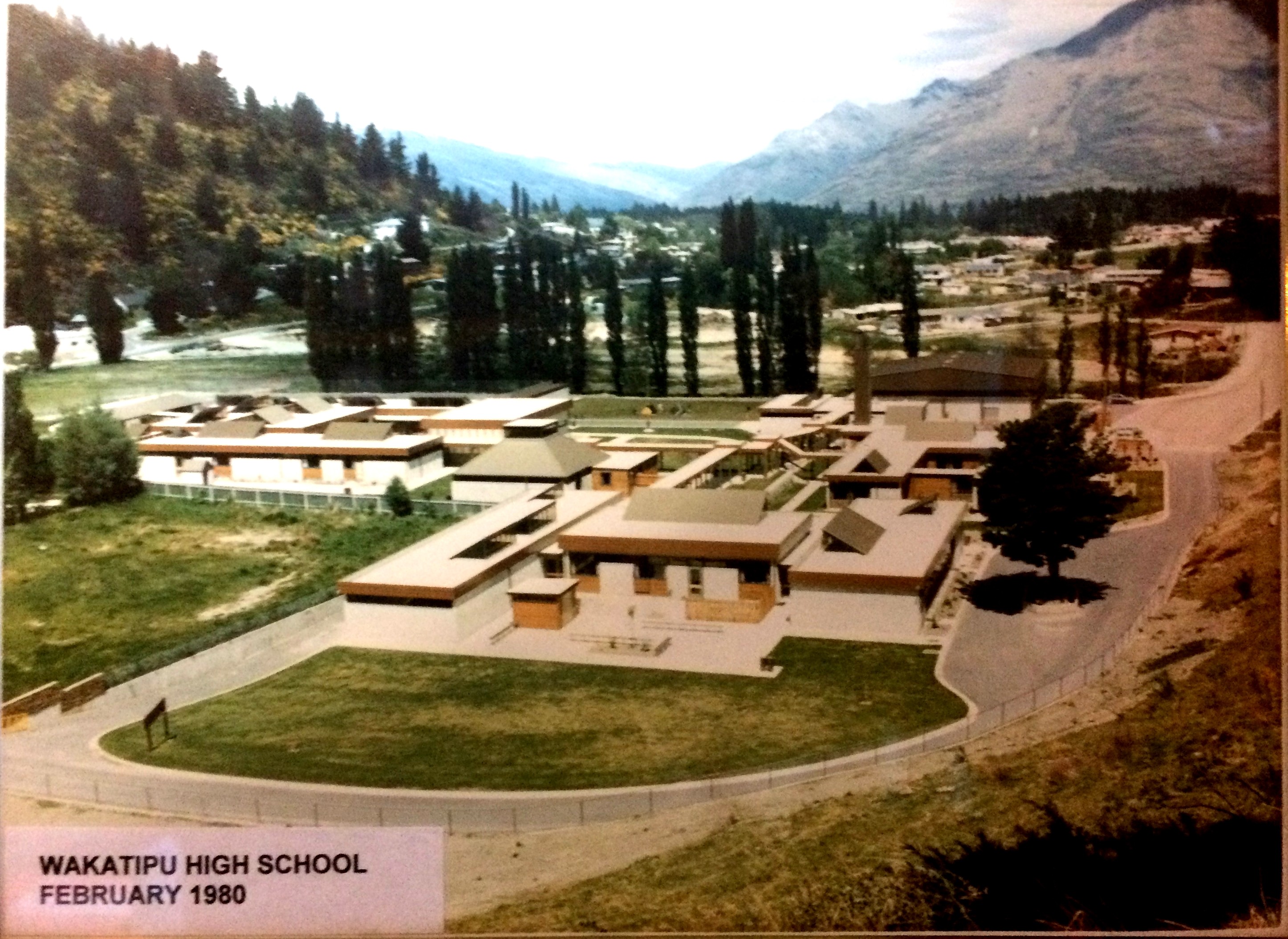
Queenstown has changed enormously in a few decades, and that change is part of what makes living here interesting. We are lucky to live in one of the most beautiful places on earth and in one of New Zealand’s most recognised destinations.
People want to come here.
People want to stay here.
That creates opportunity.
It also creates responsibility.
Infrastructure is more than roads and pipes
When we hear the word infrastructure, the conversation in Queenstown normally goes straight to roads.
Fair enough. We spend enough time sitting on them.
Then come water, wastewater, stormwater and public transport.
But the infrastructure of a growing community is bigger than that.
It includes schools.
Parks.
Sports grounds.
Libraries.
Health services.
Community spaces.
Walking and cycling connections.
Even the natural systems that help make a place resilient and liveable can be understood as part of the infrastructure supporting it - an idea worth exploring properly in another Queenstowning story.
A subdivision can deliver hundreds of houses.
But a community is not simply a collection of roofs.
The question is whether all the other things that turn those houses into a functioning place arrive at roughly the same speed.
This is really a question about sequence
I don’t think the useful version of this conversation is to blame the council, the Government, developers or the Ministry of Education.
Queenstown is growing because there is demand for it to grow, and different pieces of infrastructure are funded, planned and delivered by different organisations under very different processes.
Schools take land, funding, design, approvals, construction, staff and eventually an operating community around them.
Large transport projects take years.
Three-waters infrastructure takes planning and enormous investment.
Housing, meanwhile, can move remarkably quickly once land, zoning, finance and consents line up.
So perhaps the interesting question is not simply whether a second high school will be built.
It is:
Can the planning, construction and operation of that school move as quickly as the developments creating the future students who will need it?
And the same question applies beyond education.
It applies to roads, public transport, water infrastructure, health services, community facilities, and more.
Can the infrastructure of everyday life arrive alongside the growth rather than years afterwards?
Planning ahead is the real infrastructure story
There is some reassurance in the fact that the school is already appearing in long-term plans.
Te Pūtahi’s planning anticipated secondary-school provision. The Ministry is working on future land acquisition. Te Tapuae’s structure plan explicitly tries to coordinate housing with transport, three waters, education and other community infrastructure.
That is exactly what planning is supposed to do.
But Queenstown gives those plans a difficult test because the town can change remarkably fast.
QLDC says Te Tapuae could ultimately accommodate about 9,300 homes, and council planning documents have examined scenarios where build-out could occur significantly faster than the full 20-to-30-year planning horizon if demand remains strong.
That makes sequencing more than an academic planning question.
The children who will eventually attend another high school are not numbers in a 30-year strategy.
Some of them may already be living here.
Others will arrive with the families moving into the neighbourhoods currently being built.
A question for the community mailbox
I’m not writing this because I think Queenstown should stop growing.
And I’m not writing it as a complaint against the council or the Government.
Queenstowning is becoming, in some ways, a digital community mailbox: a place to put questions on the table, look at what is planned, understand what is happening and give the community somewhere to continue the conversation.
And that is happening because people are taking part - reading these stories, sharing them, commenting, challenging ideas and pointing us towards the next question.
The feedback and support from the community are increasingly shaping where the stories go next. In many ways, that is exactly what I hoped Queenstowning could become.
We live in an extraordinary place.
That is precisely why planning ahead matters.
Queenstown’s success brings tourism, investment, jobs, development and new people who want to make a life here. The challenge is making sure the town growing around them remains a place that works.
So maybe the high school is not only an education story.
Maybe it is another infrastructure story.
And perhaps it gives us a very simple test for the wider growth conversation:
Can we build the schools, roads, pipes, public transport and community spaces as quickly as we are building the Queenstown that will need them?
ABOUT THE AUTHOR
Founder / Editor
Cesar Carvajal is a writer, former lawyer and chef who calls Queenstown home. As founder and editor of Queenstowning, he follows the things shaping life around town - development, traffic, infrastructure, community conversations, food, arts, events and the everyday contradictions of living in this little corner of New Zealand. He is also the author of The Older Brother.
View profile →
Enjoyed this story?
Queenstowning is independently built. If you enjoy what we’re creating, you can help keep the stories coming by buying the team a coffee.
Buy the team a coffee ☕
Tag @Queenstowning or use #Queenstowning and show us your version of the Queenstown state of mind.