
By Santiago Bonhomme
Contributor
Santiago Bonhomme
•
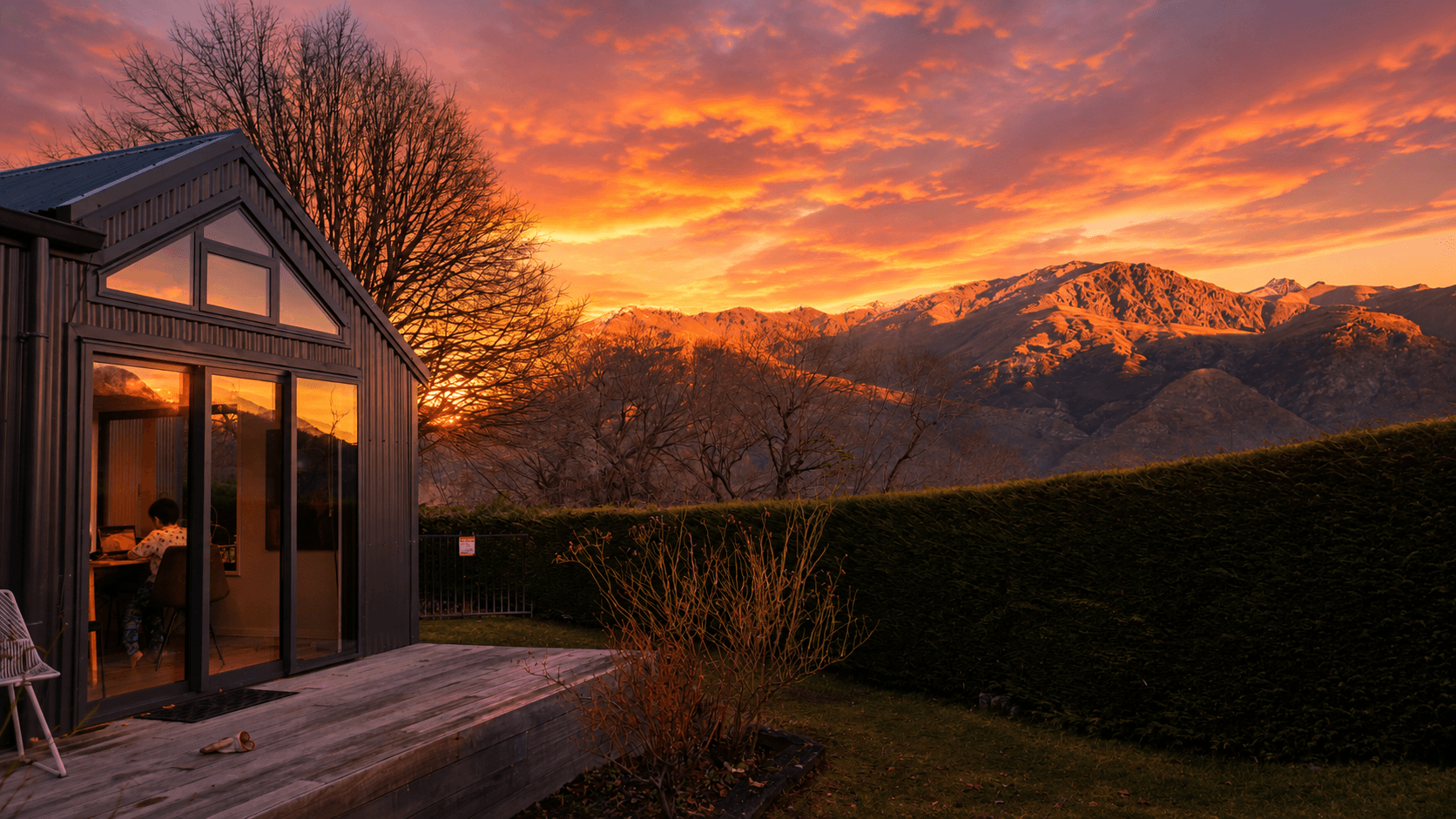
From the terrace of my home in Arrow Junction, I sometimes watch sunsets that are difficult to describe without falling into the clichés that inevitably come with living in this part of the world.
A few weeks ago, as the sky behind the mountains began turning orange, I did exactly what many of us living in Queenstown probably do. I reached for my phone.
I framed the landscape, took several photos, tried a few filters until I found the one that came closest to what was in front of me, and finally posted one.
Only then did I look up.
The spectacle was almost over.
I had spent nearly ten minutes documenting something I had barely stopped to take in.
It wasn't vanity. It wasn't even a decision. It was a reflex. And living in Queenstown probably makes that reflex even harder to resist. We are surrounded by landscapes that seem to constantly demand to be photographed. Fresh snow on The Remarkables, the lake perfectly still in the morning, Arrowtown in autumn, an empty road disappearing between the mountains.
Sometimes it almost feels absurd not to reach for your phone.
There is another image we see often around here. Someone alone beside a lake, perhaps next to a campervan, looking towards the mountains. The photograph speaks of freedom, nature, disconnection, a return to something essential. Sometimes there is even a caption about escaping the noise of the world.
And yet someone had to take out a phone.
There is something wonderfully contradictory about needing to connect in order to tell the world that we have finally managed to disconnect from it.
I don't mean that as criticism. That would be rather hypocritical after admitting what I did with that sunset. What interests me is that it reveals a contradiction from which almost none of us is entirely free.
For years we even had an acronym for our anxiety, FOMO, Fear of Missing Out. The fear of missing something, of not being where everyone else was, of discovering too late what everyone else seemed to have seen, done or experienced.
Now its opposite is beginning to gain ground, JOMO, Joy of Missing Out. The pleasure of not being there, of not knowing, of letting some things pass us by. Digital detoxes, basic phones and the deliberate search for moments without connection seem to suggest that our relationship with technology is beginning to make us uncomfortable.
Perhaps we can take that idea one step further.
Not only enjoying missing parts of other people's lives, but allowing other people to miss parts of ours.
Perhaps privacy in the future will not mean having something to hide. Perhaps it will simply mean reclaiming the right not to show.
For years we thought the internet was giving us access to the world. Something also happened in the opposite direction. The world gained permanent access to us.
We photograph food before tasting it. We record a song while it is being performed in front of us. We arrive somewhere extraordinary and almost instinctively search for the best angle to prove that we were there.
And often we don't even know exactly who we are doing it for.
There is a kind of imaginary audience we have incorporated into our lives. People who might spend two seconds looking at something we stopped looking at for ten minutes in order to show it to them.
Little by little, we have learned to watch ourselves living from the outside.
People once built a biography. Today we also build a feed. A life contained conversations nobody recorded, afternoons that left no photographs behind, and moments that simply happened and then disappeared.
Privacy didn't need to be defended. It simply happened.
Nobody knew what you had done on Saturday unless you chose to tell them. Today, if someone stops posting for long enough, we may even wonder whether they are OK. Disappearing has acquired a strange meaning because we have normalised the opposite, being permanently available, traceable and visible.
Perhaps that is why the real digital rebellion isn't deleting every app or announcing that we are leaving social media. Ironically, even that gesture often ends up becoming a post.
The rebellion could be much smaller.
Doing something beautiful and not telling anyone.
A dinner without photographs. A walk nobody can geolocate. A conversation that leaves no record. A weekend that doesn't need to become a story in order to have happened.
Not because we have something to hide, but because not everything we live needs an audience.
Perhaps twenty years from now, real luxury won't be a house overlooking the lake or travelling to the other side of the world. Perhaps it will be spending an entire weekend without leaving a digital trace.
Coming back on Monday without photographs, stories or posts to prove where we were.
Someone asks what you did.
And you can simply answer that you lived.
No evidence, no proof, no likes.
And that is enough.
ABOUT THE AUTHOR
Contributor
Santiago Bonhomme is a Queenstown-based writer and journalist, and a contributor to Queenstowning.
View profile →
Enjoyed this story?
Queenstowning is independently built. If you enjoy what we’re creating, you can help keep the stories coming by buying the team a coffee.
Buy the team a coffee ☕
Tag @Queenstowning or use #Queenstowning and show us your version of the Queenstown state of mind.