
By Santiago Bonhomme
Contributor
Santiago Bonhomme
•
Last Friday I was driving my kids to school when we found out classes had been cancelled. Jeremías screamed with joy from the back seat. He is eight, and he celebrated with that absolute happiness still possible at that age, when a cancelled school day counts as one of the purest forms of luck. His sister Jacinta, eleven, joined in immediately. I smiled. For a few seconds, inside the car, the storm had produced a small miracle. A free Friday had fallen from the sky. Almost literally.
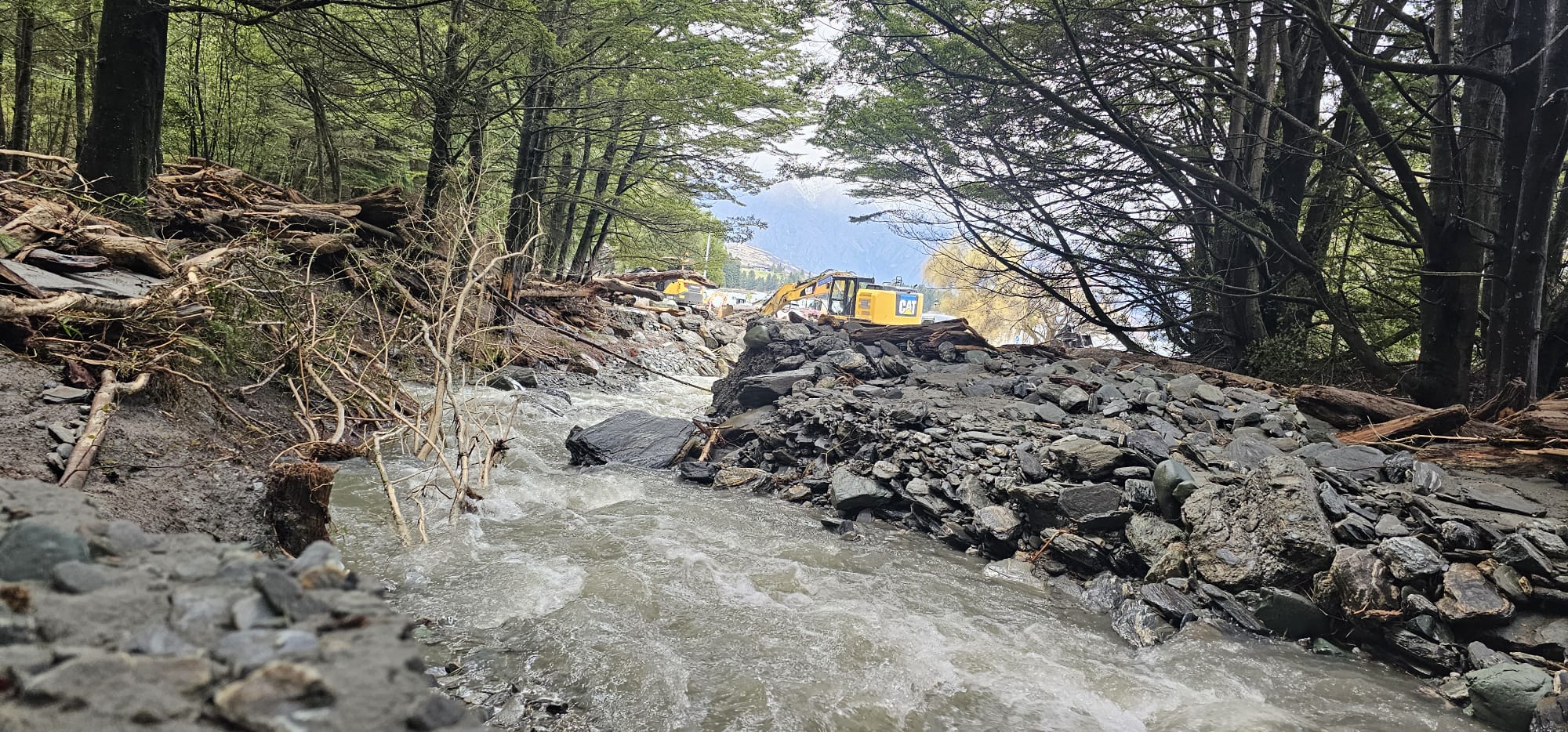
Outside, something else was happening. Queenstown was waking up after a night of heavy rain. Water was getting into properties, mud was coming down the hillsides, roads were cut off, families were forced to leave their homes. At one in the morning a Civil Defence Welfare Hub had opened at the Memorial Centre. 45 people ended up registered there, and 36 needed emergency accommodation in hotels.
While my kids were celebrating a day off, others were trying to work out where they would sleep that night. One person's happiness can be happening at the exact same moment as another person's fear.
Queenstown doesn't look like a fragile town. The mountains give precisely the opposite impression. They have been standing there for millions of years, and somehow we end up believing that we belong to that same permanence.
We build on the slopes. We open roads. We sell sections. We put up hotels. We draw new subdivisions. We put multimillion-dollar price tags on houses suspended above the lake. And we keep growing, without pause, as if the landscape around us were scenery rather than warning.
But water has a different memory. In November 1999, Lake Wakatipu reached 312.78 metres above sea level, the highest level recorded during the twentieth century. It moved into central Queenstown. There are photographs of Rees Street turned almost into an extension of the lake. Businesses stayed closed for up to three weeks. A later strategy prepared by ORC and QLDC estimated 56 million dollars in lost income and commercial damage in Queenstown alone.
That was not an anomaly without precedent. Official records list significant floods in 1878, 1924, 1994 and 1995. Then came 1999. And afterwards, we kept building.
Nearly twenty-seven years later, there are many more of us. More houses, more hotels, more cars, more visitors, more asphalt, and incomparably more pressure on the systems that make everyday life possible. So it would be too easy to describe what happened this week as simply a storm. Rain is a natural phenomenon. The way a town receives it is, instead, a decision.
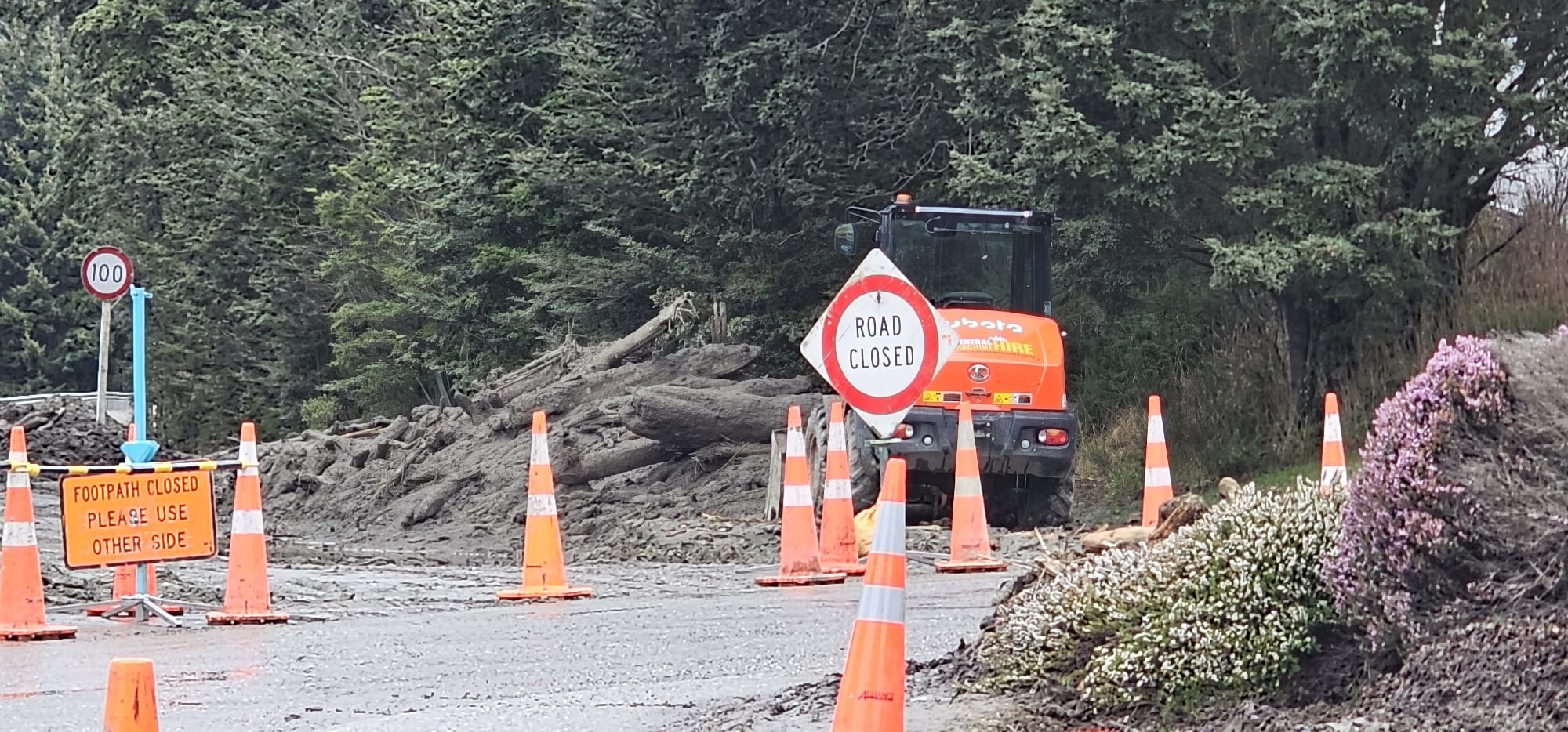
On Thursday night, Valeria, who works with us at the restaurant Caribe Latin Kitchen, finished her shift and tried to get home to Fernhill. She couldn't. The road was closed and she wasn't allowed through. She stood there for a moment, not quite sure what to do, then called a friend. She asked if she could stay the night. She had no other option. At that hour, with the rain still falling, her own home had become unreachable.
Others didn't call anyone. They tried to walk home through the forest, in the dark, while the storm carried on. Some, according to accounts we heard afterwards, ended up disoriented among the trees, not quite sure which way led out. It's a small scene next to a flooded house, but it says more than any statistic. Finishing work and discovering there is no safe way back to your own bed.
One Mile was one of the critical points that night. There was a washout, surface flooding, and damage around the roundabout. The road to Sunshine Bay was cut off by a slip. I don't question those who closed the access. If there was danger, closing it was exactly the right call.
My question starts earlier. How did we end up in a situation where, when a single point in our network fails, some residents consider walking into a forest at night, in the middle of a storm, just to get home? That is no longer just weather. That is planning.
Queenstown has known its relationship with water for a long time. There is even an official risk management strategy whose title, after this week, carries an odd literary resonance. It's called Learning to Live with Flooding. Knowing a risk and being prepared for it, however, are two different things.
QLDC maintains seven public stormwater systems across the district, with around 368 kilometres of pipes, and it has flood risk maps. This is not, then, an unknown danger. The Council itself acknowledges, in its climate change information, that Queenstown Lakes will likely face more extreme rainfall and greater risk of flooding, landslides and erosion. NIWA's national projections point in the same direction for much of the country, with especially relevant increases forecast for Otago and Southland.
I can't claim that climate change caused this particular storm. But you also can't seriously plan a town while pretending the climate of the future will be identical to that of the past.
What happens if next winter brings the same amount of water down on Queenstown again? What if it brings more?
Being prepared doesn't mean imagining an invulnerable Queenstown. That would be absurd to even try. It means reviewing the capacity of the stormwater system, keeping critical drainage points clear, identifying where water and sediment can cut off a road, and above all, thinking through alternative routes for communities that can become effectively cut off when a critical access point fails. It means asking, before approving the next development, not just how many houses fit, but how much more the thing that connects them can take.
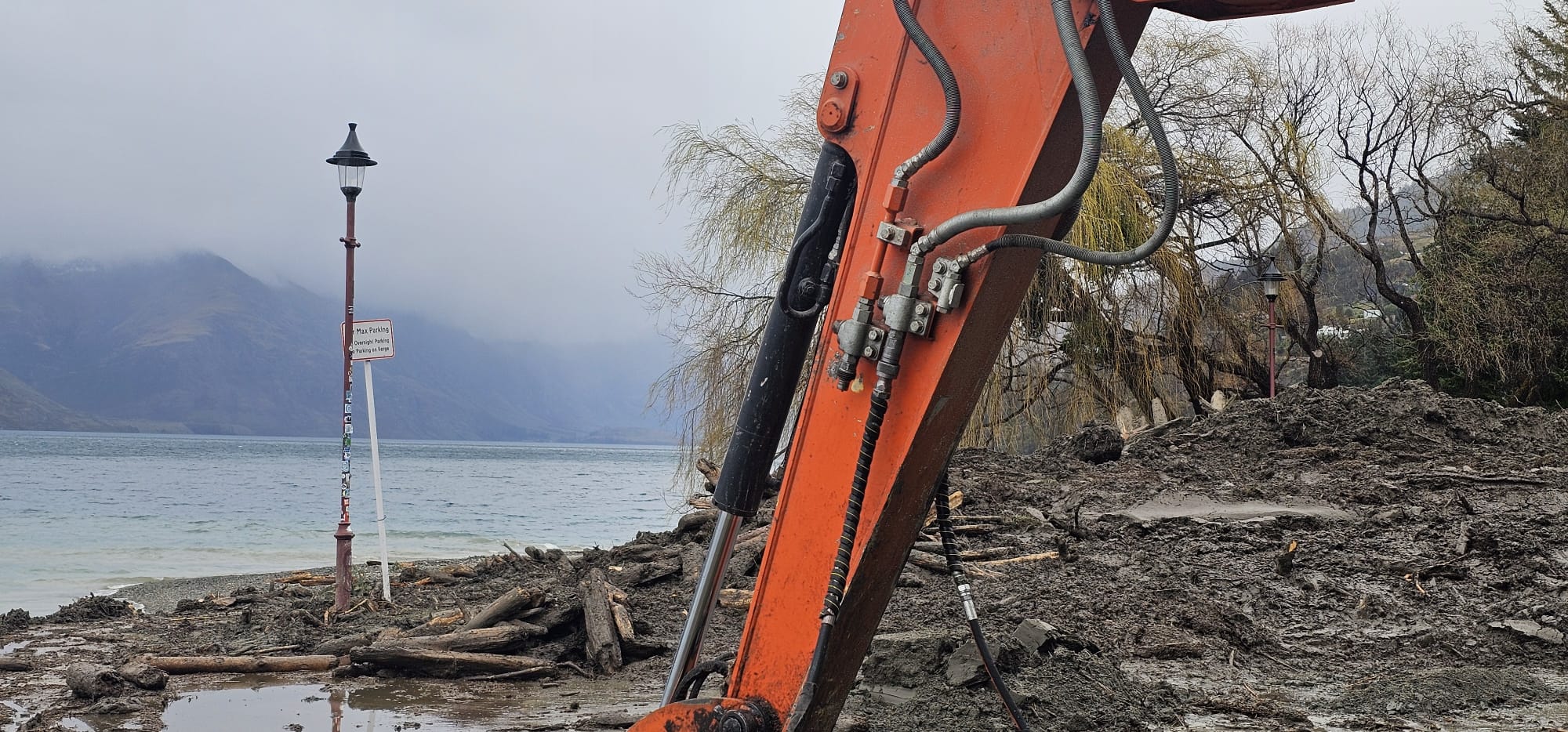
Water doesn't know our District Plans. It doesn't know what a house is worth or what a road costs, and it doesn't tell a hotel from a school. It simply flows downhill. It finds a street, a pipe, a drain, a doorway, and takes that shape. For a few hours, perhaps what the rain did was trace, with extraordinary precision, the shape of our town.
On Friday, on our way home, Jeremías was still happy. At eight years old, he has no obligation to understand any of this. For him, a storm had pulled off the small miracle of erasing a school day. I hope he keeps that version a while longer.
We adults carry a different kind of responsibility. In 1999, the water left a warning. Nearly twenty-seven years later, it came back.
The question is whether we, this time, listened.
ABOUT THE AUTHOR
Contributor
Santiago Bonhomme is a Queenstown-based writer and journalist, and a contributor to Queenstowning.
View profile →
Enjoyed this story?
Queenstowning is independently built. If you enjoy what we’re creating, you can help keep the stories coming by buying the team a coffee.
Buy the team a coffee ☕
Tag @Queenstowning or use #Queenstowning and show us your version of the Queenstown state of mind.