Sustainability

By Cesar Carvajal
Founder & Editor
Cesar Carvajal
•
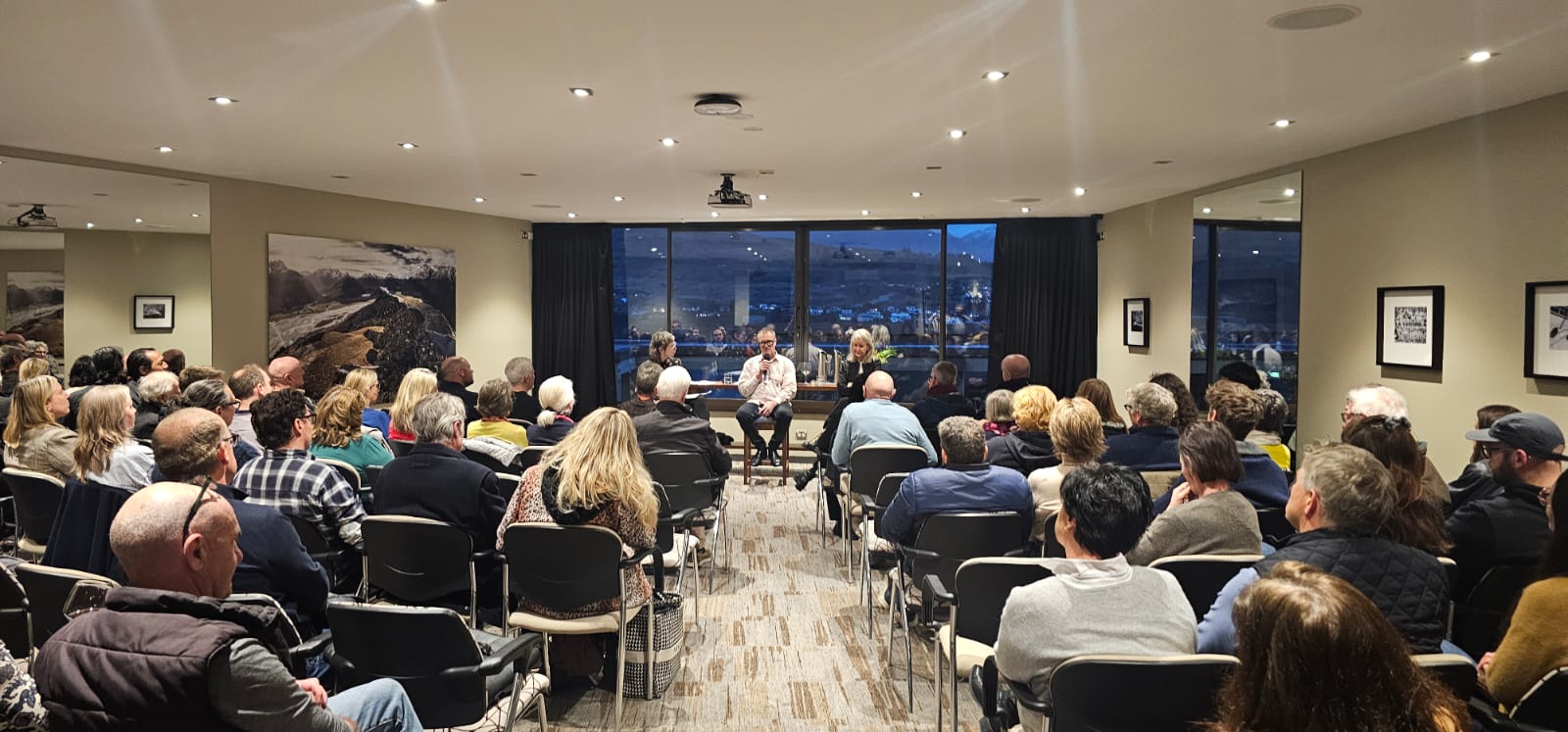
I went to The Rees Hotel with a question that had already been following me around Queenstown for a couple of weeks: Who should pay for Queenstown?
It had started with the accommodation levy. Then came the Facebook conversation, where people talked about visitors, ratepayers, developers, businesses, GST, roads and infrastructure. By Part II, the question had already changed. The discussion was no longer simply about whether tourists should pay more. It was becoming a conversation about what happens when tourism, residential growth and development keep pushing against infrastructure that is trying to keep up.
Then I walked into the Catalyst Trust event, The Future of Tourism? Policy and pressures, people and place, and heard Kiri Goulter introduce another way of looking at the problem. Her argument, published ahead of the event, included a line that stayed with me:
“But nobody is steering the tourism ship.”
She was talking about governance - about a tourism system involving national government, local government, destination organisations, businesses and communities, but without enough coordination across the whole thing.
Sitting there in Queenstown, it was difficult not to connect that idea with everything we had been hearing from the community.
But by the end of the night, I wasn't convinced the answer was simply finding somebody to grab the wheel.
I started wondering whether there was another question we needed to answer first.
What should actually be steering the ship?
The problem isn't getting people to come
Queenstown occupies a strange position in the national tourism conversation because demand is hardly our problem. People already want to visit. People want to live here. Businesses want to invest here, developers want to build here, and Queenstown remains one of the country's most recognisable tourism destinations.
New Zealand also wants tourism to grow. The Government's Tourism Growth Roadmap aims to double the value of 2023 tourism exports by 2034, while the newer Tourism Policy Statement talks about growth that benefits businesses, workers and communities and gives central government, local government and industry roles in delivering those objectives.
Queenstown Lakes, meanwhile, has its own plans for the future of tourism. Travel to a Thriving Future, the district's regenerative tourism plan, describes tourism as part of an interconnected system and talks about creating economic, social, cultural and environmental value for the place and the people who live here.
Those ambitions don't necessarily contradict each other.
The difficult part is what happens when they arrive in the same small geographical space.
Tourism grows. The resident population grows. More accommodation is required. More houses are built. More workers need somewhere to live. More businesses open. Traffic increases. Water, wastewater and transport infrastructure need to expand. Development pushes further out, commuting distances increase, and eventually we find ourselves asking whether another road, another bridge, another bus route or another piece of infrastructure is needed.
That was when a word I had written several times during the evening began to make more sense:
Balance.
What does sustainability actually mean in Queenstown?
Sustainability is one of those words that can become so broad that almost everybody agrees with it while meaning something completely different.
In Queenstown, I think it needs to be much more practical.
A sustainable tourism economy can't simply mean attracting more visitors every year. It has to ask whether the place can absorb them. A sustainable development model can't simply mean building enough housing. It has to ask whether the transport, water and community infrastructure required by that development can arrive at roughly the same pace. And sustainable growth cannot mean continually increasing demand while assuming infrastructure will somehow catch up afterwards.
The same applies in the other direction. Queenstown cannot talk about sustainability as if tourism were an inconvenience we could simply switch off. Tourism is woven deeply into the district's economy. It supports businesses, employment, investment and much of the character of the place we have today.
So sustainability here seems less like choosing between growth or no growth and more like managing the relationship between tourism, residential growth, development and infrastructure.
That is the balance I kept hearing beneath the Catalyst discussion.
How much growth can a place absorb? How quickly can infrastructure respond? And what happens when one part of the system moves much faster than the others?
Tourism doesn't live in its own box
One of the useful things about the Catalyst conversation was the reminder that tourism cannot really be separated from everything around it.
Mat Woods had already made that connection very clearly ahead of the event when discussing the combined pressure of tourism growth and residential growth in Queenstown, adding a line that is hard to argue with:
“And no one comes on holiday to go to gridlock.”
Catalyst's event material quoted Woods saying that residential and tourism growth had pushed Queenstown to a point where action was needed immediately.
That sentence says a lot.
Traffic is obviously a problem for locals. But eventually it becomes a tourism problem too. Housing shortages affect residents, but they also affect the businesses trying to recruit the people who serve visitors. Infrastructure shortages affect ratepayers, but they also affect hotels, restaurants, developers, workers and tourists.
The more I listened, the more the system in my notebook looked very simple:
Residential growth ↔ Infrastructure ↔ Tourism growth
Of course the real world is much messier than that. But perhaps that's the basic relationship we're trying to manage.
Not tourism against residents. Not development against infrastructure. Not locals against visitors.
The harder question is whether all of these moving parts are being planned as pieces of the same place.
Does every bit of tourism growth have to happen here?
Another idea from the night stayed with me because it turns the usual Queenstown conversation around.
I had written in my notes:
Build outside QT - release pressure.
And underneath that:
Some communities are struggling. They need tourism there.
New Zealand has places trying hard to attract visitors and investment. Queenstown, meanwhile, is regularly discussing how to handle the concentration of demand it already has.
That raises an interesting national question.
If New Zealand wants tourism to grow, does all of that future growth have to accumulate in destinations already experiencing the strongest infrastructure pressure?
This doesn't mean telling people not to come to Queenstown. People will continue coming, and that's part of the success of the place.
But perhaps destination management isn't only about generating demand anymore. Perhaps part of the job is also shaping it - encouraging people to discover other places, travel differently, stay longer, move around the country and spread some of the economic opportunity.
And that is where I started thinking differently about communications.
Communications should be inside the conversation
One thing I would like to see given more weight in conversations like this is communications - and not simply as the department that arrives after a decision has been made and explains it to everybody else.
Communication can be part of the decision-making process itself.
It creates the spaces where people meet. It helps make complicated policy understandable. It brings information from institutions into the community and brings community experience back into professional conversations. It can show the trade-offs honestly, put evidence in front of people and help different sectors recognise that they may be talking about different parts of the same problem.
Catalyst itself was a good example of that.
Someone created a room at The Rees. People with years of experience in tourism and destination management shared what they knew. Others came to listen and ask questions. I sat near the back taking notes, went home thinking about what I had heard, and now some of those ideas are entering another public conversation through Queenstowning.
Without that communication and participation, this article probably doesn't exist.
And perhaps that matters more than it first appears.
The council may be talking about infrastructure. A tourism organisation may be thinking about destination demand. A developer is thinking about housing supply. Central government is thinking about tourism exports. A resident may simply be thinking about why it took forty minutes to get from Frankton to town.
Sometimes all of them are talking about different symptoms of the same system.
Communication can help connect those conversations before frustration becomes the only thing connecting them.
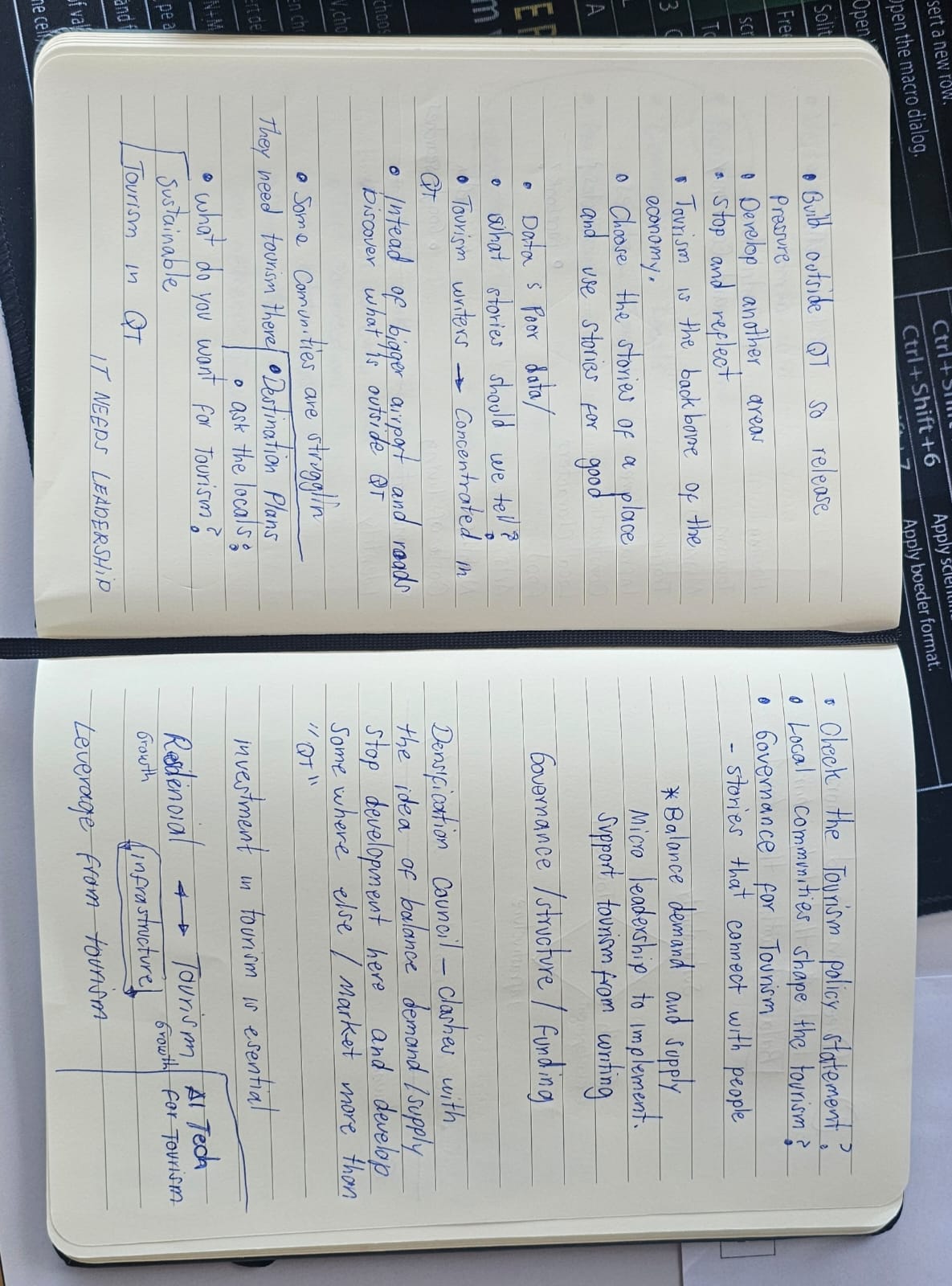
Notes from the Community Desk during the Catalyst tourism discussion. Photo: Queenstowning.
The stories we choose can change the place
There was another contribution during the Catalyst discussion that ended up underlined in my notebook. Tom spoke about the stories we choose to tell about a place, and the possibility of using stories for good.
I'm paraphrasing from my notes rather than quoting him directly, but the idea stayed with me.
Tourism is partly built through stories. We tell people what a destination is. We show them what to visit, what to photograph, where to eat, what experiences matter and what kind of place they should expect to find when they arrive.
Queenstown has been exceptionally successful at telling a story people want to experience.
Perhaps that means communications now has another responsibility.
The question may no longer be simply, “How do we convince more people to come?”
It can also be:
What stories should we be telling now?
Stories that encourage visitors to discover more than the obvious places. Stories that strengthen connections with local culture and communities. Stories that help distribute demand. Stories about parts of New Zealand where tourism could create opportunities rather than additional pressure. Stories that help residents understand how their town is changing and why.
And perhaps stories that allow Queenstown to have a more honest conversation with itself.
Because communications should not only describe the destination we're building.
It can help us decide what destination we actually want to become.
There is plenty of leadership here
Another thing I wrote in large letters during the evening was:
IT NEEDS LEADERSHIP.
A few days later, I think I would write that differently.
Queenstown doesn't appear short of leadership.
There are capable people working across Destination Queenstown, Lake Wānaka Tourism, QLDC, Kāi Tahu, tourism businesses, infrastructure organisations, central government, development, community organisations and plenty of other places.
The district's regenerative tourism plan itself was developed through a partnership between Destination Queenstown, Lake Wānaka Tourism and QLDC, with engagement from Kāi Tahu, DOC, community organisations and residents.
The challenge may be that all of those people are working within different structures.
Different organisations have different responsibilities, different budgets, different political cycles and different definitions of success. Council has things it can control and things it can't. Central government has another set of responsibilities. Tourism organisations have another. Developers, businesses and infrastructure providers all respond to different incentives and pressures.
So perhaps the problem isn't:
Where are the leaders?
It is:
How do we coordinate the leadership we already have?
Queenstown has something valuable in the amount of experience, knowledge, networks and institutional capability concentrated here.
Maybe the opportunity is to use that leadership capital better - particularly when tourism, development and infrastructure increasingly overlap.
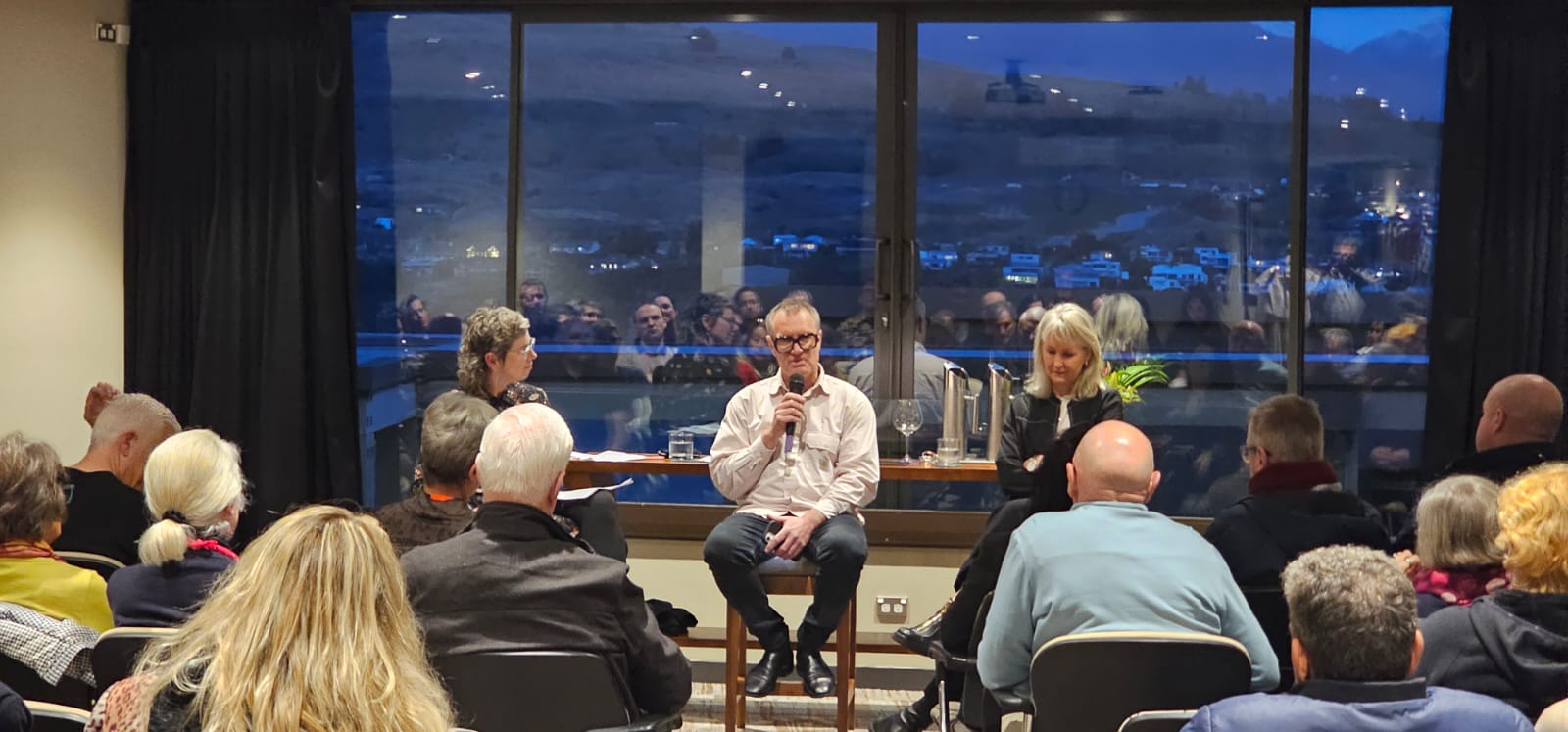
Different parts of Queenstown's tourism and community network came together at The Rees for the Catalyst discussion. Photo: Queenstowning.
What are we actually trying to achieve?
One of the simplest lines in my notes was also one of the biggest:
What do you want for tourism?
I think that question deserves more attention.
Not:
Do you want tourists?
That would be almost meaningless in Queenstown. Tourism is part of who we are and how the place works.
A more useful question is:
What do we want tourism to do for Queenstown?
Do we want it to help deliver better infrastructure? Create better jobs? Support public transport? Strengthen local businesses? Support arts and culture? Create opportunities for younger people? Contribute more visibly to the communities hosting it?
And the same could be asked of development.
What do we want growth to leave behind?
More houses, certainly.
But also better roads? Better transport? Better community facilities? Better connections between neighbourhoods? A town that becomes easier to live in rather than simply bigger?
If we can agree more clearly on the outcomes, perhaps the arguments about growth become more useful.
Because growth by itself isn't really a destination.
Who is steering the ship?
That brings me back to Kiri Goulter's line:
“But nobody is steering the tourism ship.”
Her argument was that New Zealand needs stronger national and regional governance capable of coordinating activity across the tourism system from a public-good perspective.
After Catalyst, I've kept thinking about it.
I understand the governance challenge behind it. Tourism touches so many institutions and sectors that responsibility can become fragmented.
But I'm not sure Queenstown needs one captain.
This place is too complicated for one person or organisation to sit above tourism, development, housing, transport, infrastructure, business and community and control all of it.
Maybe the more important question is not who should steer the ship.
Maybe it is:
What should steer it?
Looking back through my notes, I keep returning to three ideas.
Balance - between tourism demand, residential growth, development and infrastructure capacity.
Sustainability - growth that the place can actually support rather than permanently chasing from behind.
Community benefit - success that leaves Queenstown stronger for the people who live and work here, not simply busier.
If there is broad agreement about values like those, then leadership becomes less about finding one person with all the answers and more about getting many capable people moving towards roughly the same destination.
Council won't always agree with central government. Businesses won't always agree with residents. Developers won't always agree with planners. Tourism organisations won't always agree with each other.
They don't have to.
Healthy places need disagreement.
But disagreements are easier to navigate when people broadly understand where they're trying to go.
Maybe the ship needs a compass
This series began with a very practical question:
Who should pay for Queenstown?
The community pushed us towards another one:
Where does the money already go?
Then Part II took us into the relationship between tourism growth, residential growth and infrastructure.
Catalyst has added something else:
Who coordinates the system?
Perhaps the answer isn't another organisation or one person sitting above everybody else.
Maybe it starts with clearer agreement about what success means for this place, better coordination between the leadership already here, and communication that keeps the community inside the conversation rather than bringing people in only after the decisions have been made.
Balance. Sustainability. Community benefit.
Maybe Queenstown doesn't need one captain.
Maybe it needs a compass.
And once we have a clearer idea of where we're actually trying to go, we can return to the question that started all of this:
Who should pay to get us there?
ABOUT THE AUTHOR
Founder & Editor
Cesar Carvajal is a writer, former lawyer and chef who calls Queenstown home. As founder and editor of Queenstowning, he follows the things shaping life around town - development, traffic, infrastructure, community conversations, food, arts, events and the everyday contradictions of living in this little corner of New Zealand. He is also the author of The Older Brother.
View profile →
Enjoyed this story?
Queenstowning is independently built. If you enjoy what we’re creating, you can help keep the stories coming by buying the team a coffee.
Buy the team a coffee ☕
Tag @Queenstowning or use #Queenstowning and show us your version of the Queenstown state of mind.